

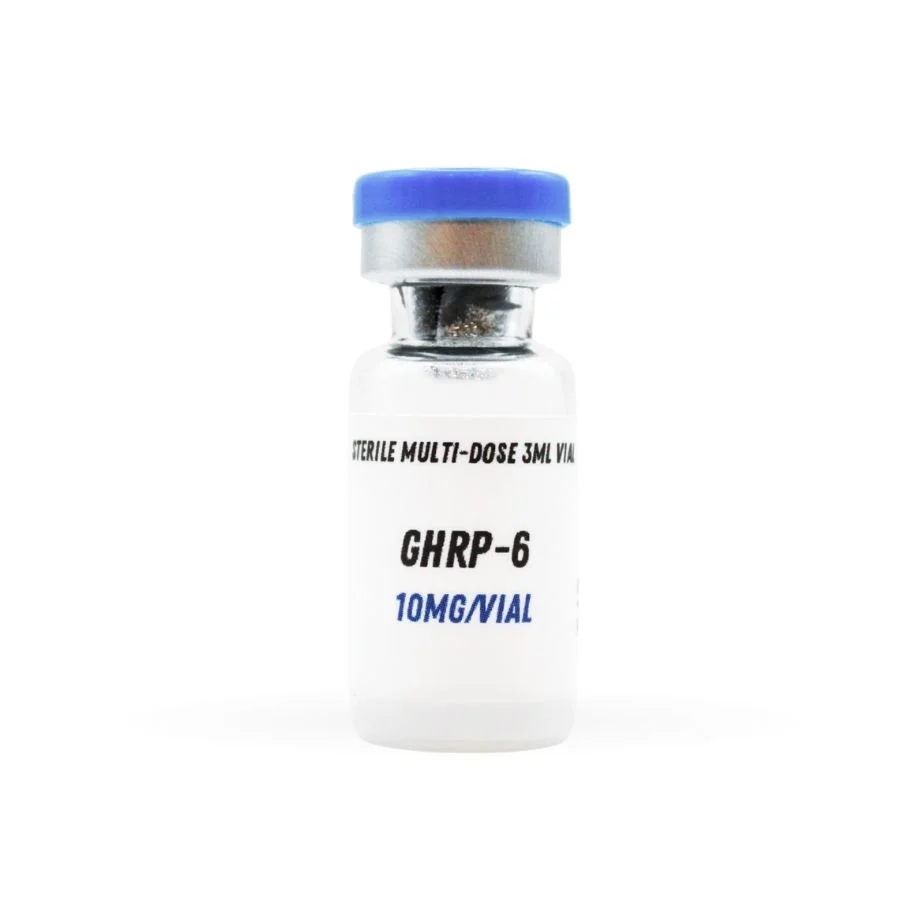
GHRP-6
$34.99
Hexapeptide Ghrelin Receptor Agonist for GH-Axis, Metabolic & Appetite Research
GHRP-6 is intended exclusively for laboratory research purposes. It is not approved for human or animal administration and must not be used for therapeutic, diagnostic, or clinical purposes. Handling is restricted to trained research professionals in controlled environments.
$34.99
Description
Overview
GHRP-6 is a synthetic hexapeptide and one of the earliest compounds developed in the Growth Hormone Releasing Peptide (GHRP) family. It acts primarily as an agonist of the ghrelin (GHS-R1a) receptor, stimulating growth hormone (GH) release independently of GHRH pathways. Due to its potent GH-releasing capability and unique physiological effects, GHRP-6 is widely utilized in preclinical research focused on endocrine regulation, metabolism, hunger signaling, and tissue regeneration.
Preclinical Research Background
Animal and in vitro studies suggest that GHRP-6 may:
- Stimulate pulsatile GH secretion via GHS-R1a activation
- Increase circulating IGF-1 levels in GH-responsive tissues
- Modulate appetite and hunger signaling through ghrelin pathway interaction
- Influence glucose metabolism and lipid utilization
- Support tissue repair and protein synthesis through downstream GH/IGF pathways
Its broad physiological relevance has made GHRP-6 a cornerstone model for studying GH-axis regulation and metabolic signaling.
Key Findings in Early Research
Preclinical models indicate that GHRP-6 may:
- Enhance anabolic activity and muscle recovery
- Improve sleep depth and recovery-associated GH pulses
- Support bone density and joint tissue repair
- Influence appetite stimulation in metabolic or cachexia research
- Work synergistically with GHRH analogs such as Sermorelin or CJC-1295
Compared to more selective secretagogues like Ipamorelin, GHRP-6 demonstrates a wider range of metabolic effects due to its strong ghrelin mimicry.
Areas of Emerging Scientific Interest
Researchers continue to explore GHRP-6 in relation to:
- Endocrine aging and diminished GH output
- Appetite and feeding behavior models
- Sarcopenia and muscle-wasting research
- Metabolic syndrome, insulin sensitivity, and energy regulation
- Tissue regeneration and wound-repair pathways
Its dual influence on GH secretion and appetite pathways provides a unique platform for metabolic and endocrine studies.
Additional Information
| mg/vial | 2mg/vial, 10mg/vial, 5mg/vial * 1vial |
|---|
COA / HPLC / MS
Related Products

Reviews
There are no reviews yet.