

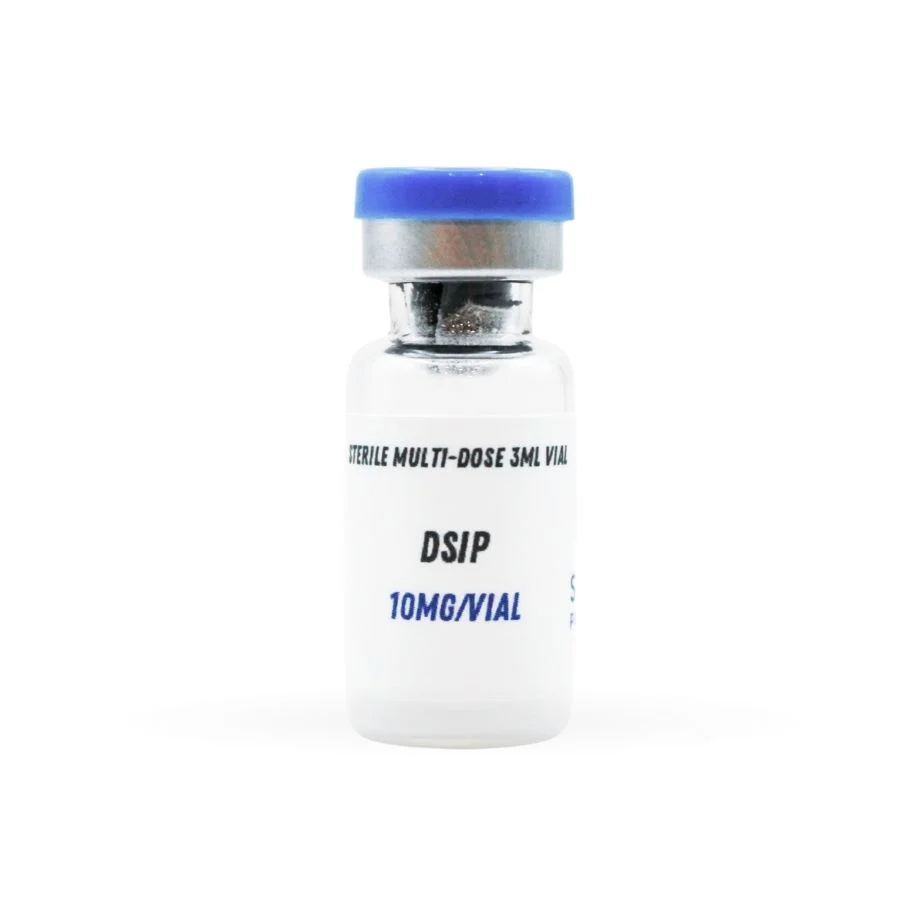
DSIP
$54.99
Neuropeptide for Sleep Regulation, Stress Response & Neuroendocrine Research
DSIP is intended strictly for laboratory research purposes. It is not approved for human or animal administration and must not be used for therapeutic, diagnostic, or clinical applications. Handling is restricted to trained research personnel in controlled laboratory environments.
$54.99
Description
Overview
DSIP is a naturally occurring neuropeptide originally identified for its involvement in sleep regulation. Composed of eight amino acids, DSIP has been extensively examined in preclinical studies for its potential effects on sleep–wake cycles, stress adaptation, pain modulation, and neuroendocrine balance. Its broad range of neurological interactions makes it a valuable tool in sleep science and neurobiological research.
Preclinical Research Background
Animal and cellular studies suggest DSIP may:
- Influence slow-wave (delta) sleep activity
- Support homeostasis within the sleep–wake regulatory system
- Modulate stress responses by affecting hypothalamic signaling
- Interact with opioid and neuroendocrine pathways
- Reduce oxidative stress and support neuronal protection
These findings highlight DSIP’s multifaceted role in neurophysiology.
Key Findings in Early Research
In preclinical models, DSIP has demonstrated potential to:
- Promote deeper and more stable delta-wave sleep patterns
- Reduce stress-induced neuroendocrine disruptions
- Support adaptive responses to physical and emotional stress
- Improve resilience to sleep deprivation
- Modulate pain perception through central pathways
Its diverse neuroactive profile has positioned DSIP as an important compound in sleep and stress-response research.
Areas of Emerging Scientific Interest
Current research continues to explore DSIP for potential applications in:
- Models of insomnia and disrupted circadian rhythms
- Stress and anxiety-related neurological adaptation
- Neuroprotection and cellular resilience under oxidative load
- Hormonal regulation involving the pituitary–hypothalamic axis
- Studies on fatigue, performance, and recovery
Its involvement across sleep, stress, and endocrine systems provides numerous avenues for ongoing scientific inquiry.
Additional Information
| mg/vial | 5mg/vial |
|---|
COA / HPLC / MS
Related Products

Reviews
There are no reviews yet.