

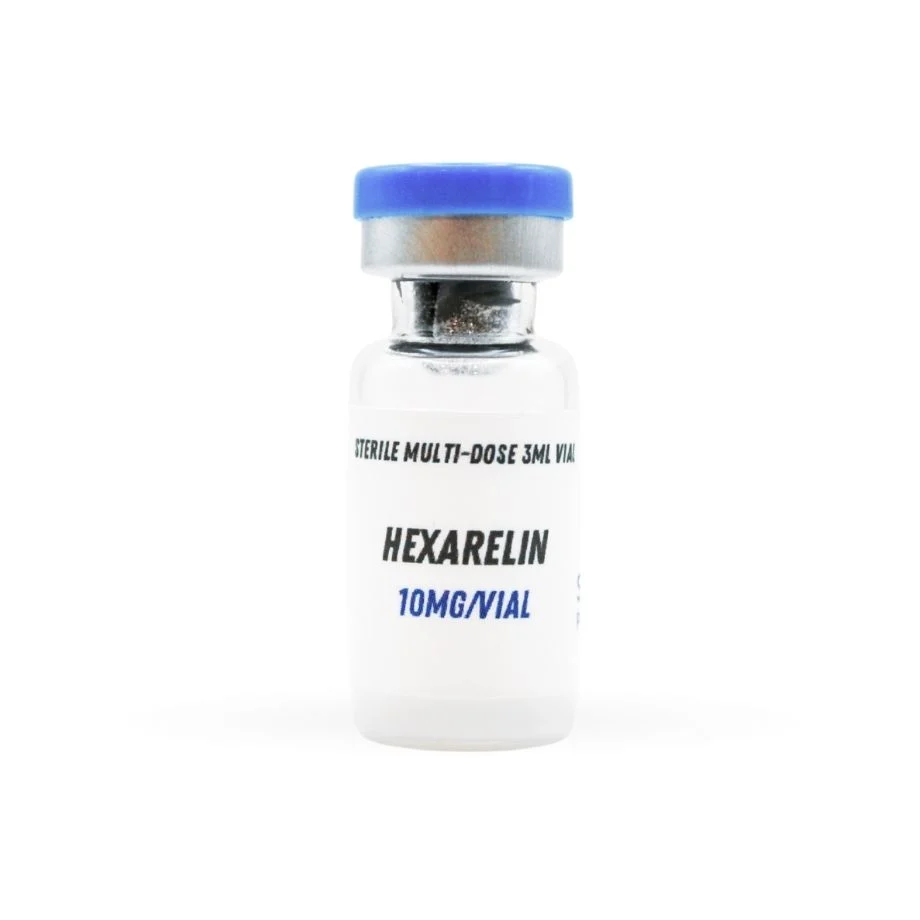
Hexarelin
$49.99
Available on backorder
Potent Synthetic Growth Hormone Secretagogue for Endocrine, Cardiac & Metabolic Research
Hexarelin is provided strictly for laboratory research purposes. It is not approved for human or animal administration and must not be used for therapeutic, diagnostic, or clinical applications. Handling is restricted to trained and licensed research personnel.
$49.99
Available on backorder
Description
Overview
Hexarelin, also known as Examorelin, is a synthetic hexapeptide within the Growth Hormone Releasing Peptide (GHRP) family. It is considered one of the most potent ghrelin receptor agonists for stimulating growth hormone (GH) release. Beyond its endocrine effects, Hexarelin has been widely studied for its potential cardioprotective, metabolic, and tissue-regenerative properties in preclinical models.
Preclinical Research Background
Studies in animal and cellular systems suggest that Hexarelin may:
- Strongly activate GH secretion through GHS-R1a receptor binding
- Increase systemic IGF-1 levels in GH-responsive tissues
- Enhance anabolic signaling and protein synthesis
- Protect cardiac tissue from ischemic or oxidative damage
- Modulate lipid metabolism and energy regulation
Hexarelin’s robust and predictable GH-releasing effect makes it valuable for controlled endocrine research.
Key Findings in Early Research
Preclinical models indicate that Hexarelin may:
- Support muscle recovery and lean mass development
- Improve cardiac contractility and ventricular function
- Reduce fibrosis and apoptosis in myocardial tissue
- Strengthen bone and connective tissue via GH/IGF-1 pathways
- Deliver more potent GH stimulation compared to GHRP-6 and GHRP-2
Its cardioprotective activity has been of particular interest, distinguishing Hexarelin from other GH secretagogues.
Areas of Emerging Scientific Interest
Ongoing research continues to explore Hexarelin for potential roles in:
- Heart failure and post-ischemic cardiac recovery models
- Age-related GH decline and endocrine dysfunction
- Muscle-wasting and catabolic disease states
- Metabolic syndrome and insulin sensitivity
- Tissue regeneration and anti-apoptotic pathways
Its dual relevance in both endocrine and cardiovascular science broadens its potential applications in preclinical research.
Additional Information
| mg/vial | 5mg/vial |
|---|
COA / HPLC / MS
Related Products
Reviews
There are no reviews yet.